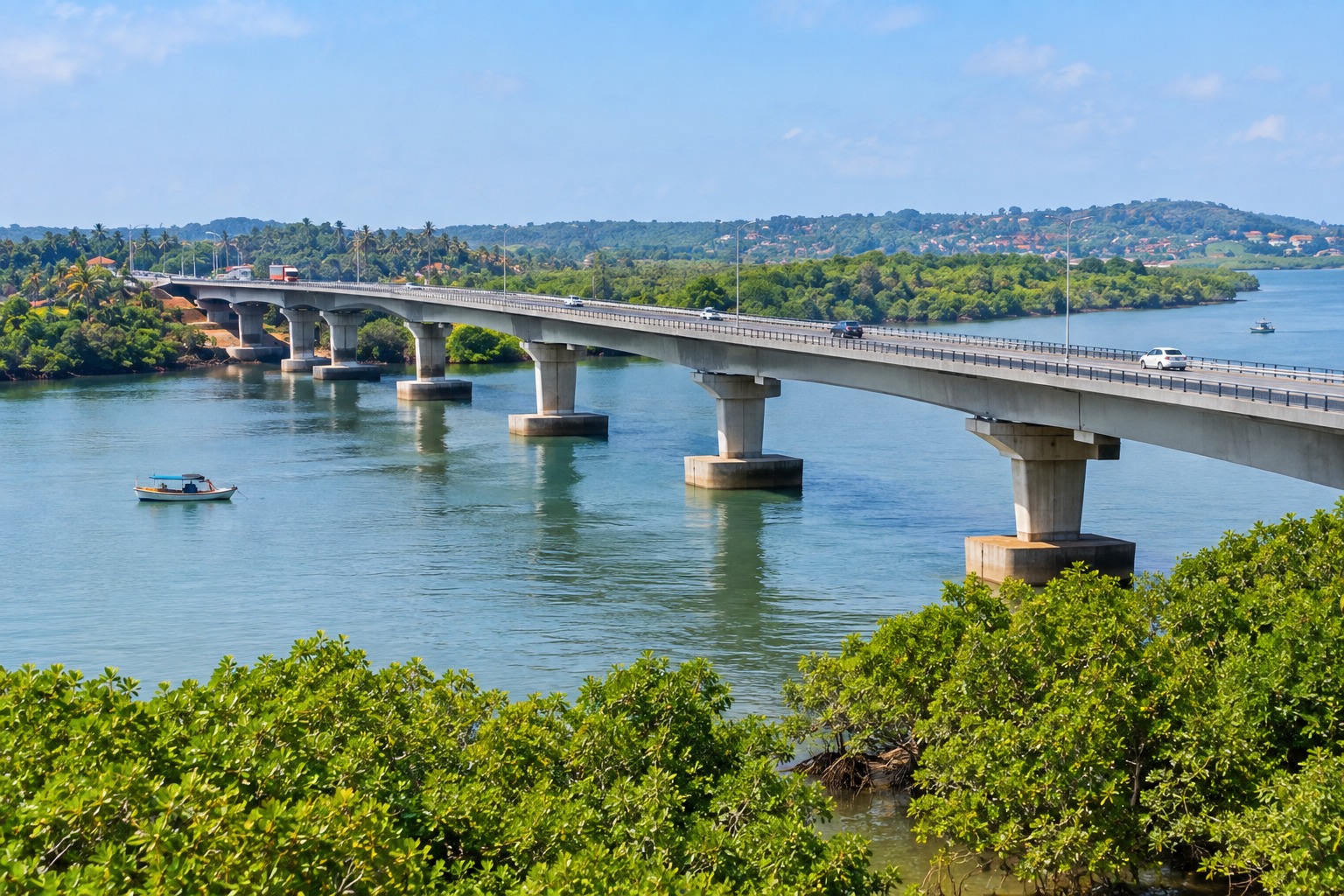
PANAJI: The proposed ₹360-crore bridge connecting Chorao to the mainland has moved a step closer to implementation after the Expert Appraisal Committee (EAC) of the Union Ministry of Environment, Forest and Climate Change recommended granting CRZ clearance for the project.
The EAC, however, has called for strict environmental safeguards, particularly in view of the mangrove forests and riverine ecosystems along the proposed alignment.
The 1.62-km bridge and its approach roads are expected to impact around 621 mangrove trees—449 on the Salvador-do-Mundo side and 172 on the Chorao side.
The original design included 20 piers, with foundations extending up to 35 metres. Several structures were proposed in riverine and mangrove-rich areas classified as CRZ-III No Development Zone.
Following the EAC’s observations, the Goa State Infrastructure Development Corporation (GSIDC) revised the design on the Salvador-do-Mundo side. The number of piers has been reduced from 12 to nine, with their locations also modified. GSIDC estimates that the changes could save around 100 mangrove trees from removal.
As part of the mitigation measures, GSIDC has proposed a mangrove restoration programme under its Mangrove Management Plan. The plan envisages planting mangroves at a 1:5 replacement ratio, amounting to approximately 3,105 trees at suitable riverine locations.
The EAC has directed that the restoration programme be independently monitored. An independent agency or reputed institution will assess the survival rate and ecological performance of the plantations annually, with the findings included in environmental compliance reports.
The project’s Environmental Management Plan has earmarked ₹1 crore for environmental management and mitigation measures.
The committee has also directed GSIDC to ensure that construction does not adversely affect water quality or adjoining mangrove habitats. Maintaining the existing water flow and hydrological pattern of the Mapusa River and surrounding intertidal areas has been specifically emphasised.
The recommendation marks an important step for the bridge project, while placing environmental compliance and mangrove conservation at the centre of its implementation.